Thinking about selling your horse farm in Fauquier County and not sure where to price it? You are not alone. Equestrian properties are a different animal than standard homes or raw land, and mispricing can cost you time and money. In this guide, you will learn what local buyers value most, how appraisers approach barns and arenas, and the documents you should gather before you list. Let’s dive in.
Why horse farm pricing is different here
Regional buyer pool, not just local
Fauquier sits inside a robust Northern Virginia equestrian scene anchored by venues like Great Meadow. Events, hunts, and clinics attract riders and trainers from across the DC metro area, which expands your buyer pool beyond immediate neighbors. That regional demand matters when you position your farm and choose a price point tied to real equestrian utility, not just acreage. You can see the local event context through the Great Meadow events center overview.
Market snapshot and what it means
Countywide, the median home price has recently sat in the low-to-mid $700,000s, and average days on market run in the several-dozen range. Submarkets tied to equestrian hubs such as The Plains, Delaplane, and Upperville trend higher. Use this as a backdrop, not a direct pricing input for a working farm. Start with current data like the Fauquier County market page, then adjust based on land and horse infrastructure.
Per-acre values vary widely
Do not assume a simple acres times a county average. In Fauquier, per-acre pricing swings significantly between premium northern equestrian corridors and more rural southern tracts. Improved horse farms with usable pasture and infrastructure often sell at much higher per-acre figures than raw timber or pasture land. For context on local spreads, review this Fauquier County land market summary.
Features that drive price
Location, access, and usable acres
Buyers pay for function. Proximity to established equestrian centers and events, paved access, and a reasonable commute to Northern Virginia job centers can all lift value. Just as important is how many acres are actually usable for turnout, arenas, and future barns. Parcels that look large on paper but are steep, wet, or heavily wooded will usually trade at a discount to similarly sized, well-drained tracts.
Barns and stable infrastructure
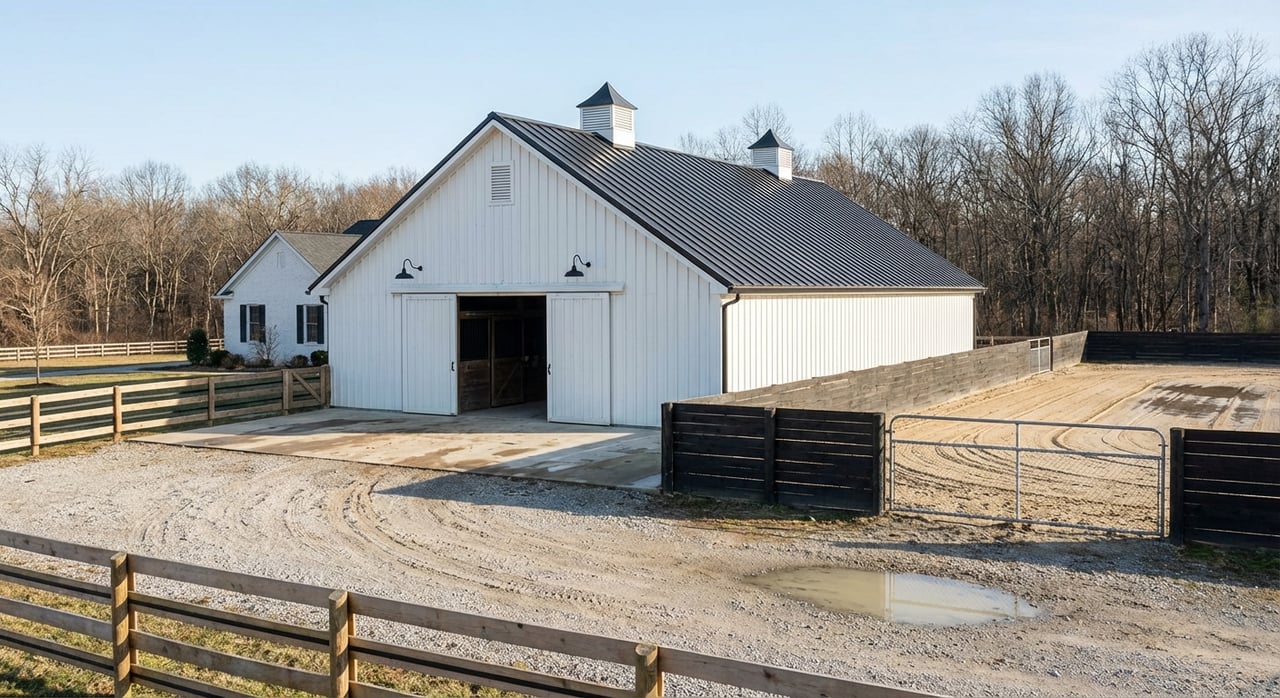
Stall count and size, ventilation, tack and feed rooms, hay capacity, wash racks, hot and cold water, and isolation stalls all influence buyer interest. A manager or groom’s apartment can improve utility for training and boarding operations. Appraisers often treat large barns as special-purpose improvements, which means they will weigh replacement cost and depreciation when comparable sales are thin. For an overview of how appraisers handle such properties, see this article on special-purpose property valuation.
Arenas and footing quality
Indoor arenas broaden the buyer pool in this climate, especially for training and year-round programs. Outdoor arenas that are well-drained, with a proper base and consistent footing, also add value. Pricing the premium is case-specific. Appraisers consider replacement cost less depreciation and search for regional comps with similar facilities.
Pastures, drainage, and carrying capacity
Usable, well-fenced pasture is often the number one driver of marketability. Stocking rates in temperate conditions typically range from about 1 to 3 acres per horse depending on soil, forage, and grazing management. Rotational systems and sound nutrient management can support more horses per acre without degrading the turf. Rutgers provides a clear overview of these dynamics in its guidance on pasture stocking rates and management. In valuation, expect well-drained pasture to carry more weight than equivalent acres that are wet or wooded.
Fencing and mud management
Buyers look for safe perimeter fencing with clear visibility and secure cross-fencing. In Fauquier’s clay-rich soils, mud control around gates, waterers, and sacrifice areas is a recurring concern. High-use pads, underdrains, and surfaced lanes reduce risk and maintenance. For a local perspective on footing and waterers, explore this overview of mud management and fencing considerations.
Water supply, wells, and septic
Reliable water is non-negotiable. Multiple hydrants, frost-free waterers, and documentation of well yield and water quality keep lenders and buyers comfortable. Virginia regulates private wells, and buyers often ask for well logs and recent tests. You can review the state framework in the Virginia private well regulations summary. Septic permits, capacity, and pump-out history are also routine disclosures.
Trails, ride-outs, and connectivity
Off-farm ride-out, recorded trail easements, and proximity to public or private trail systems strengthen appeal for sport-horse buyers. Document any recorded easements and informal agreements that will convey.
Business infrastructure and tax status
If you operate a boarding, training, or lesson business, clean financials, contracts, and staff continuity can add to value under an income approach. Fauquier County’s land-use assessment program can lower property taxes for qualifying agricultural or horticultural uses. Horses count only when part of a commercial breeding or boarding business. Recreational horses alone do not qualify acreage. Review program details on the county’s land-use assessment page.
House versus land split
For many equestrian buyers, the land and horse infrastructure are the product. For lifestyle buyers, the residence can drive decisions. Appraisers and experienced brokers will separate the value of the residence from the value of the land and specialized improvements and then align the price with the most likely buyer profile.
How appraisers value horse farms
Sales comparison approach
Appraisers start with sales comparison for the residence and land when comparable sales exist. For specialized equine improvements like custom barns and arenas, comparable sales are harder to find. Appraisers often expand the geographic search or pair the sales comparison with other methods. See the special-purpose property valuation framework for context.
Cost approach
When improvements are new, unique, or scarce in the comps, the cost approach takes a larger role. The appraiser estimates replacement or reproduction cost for the barn and arena, deducts physical and functional depreciation, and may factor in feasibility for alternative uses.
Income approach
If your farm operates as a going concern with reliable income from boarding, training, lessons, or events, the appraiser can apply a direct capitalization or discounted cash flow method. They will separate intangible business goodwill from real estate value and rely on documented operating statements.
Special-purpose and limited-market issues
Large, tailored facilities can limit the buyer pool to those who need that exact configuration. In these cases, appraisers lean more on cost and income approaches and will document likely buyers, conversion costs, and regional market support, including proximity to venues like Great Meadow and Upperville.
Land-use assessment and tax implications
Confirm your land-use enrollment early. Fauquier’s use-value assessment can defer taxes for qualifying agricultural uses, but the rules for equine operations are specific. Be prepared for roll-back tax exposure if a change of use or subdivision occurs. Details are outlined on the county’s land-use assessment page.
A practical pricing workflow
Because equestrian properties are specialized and comps are limited, expect a step-by-step valuation:
- Determine land value per acre using nearby rural acreage sales.
- Add the contributory value of horse improvements using comparable sales where available or a cost approach when not.
- If there is a documented business, analyze that income stream separately. You can see why local land data matters by reviewing this Fauquier County land market context.
Pre-sale checklist to price with confidence
Legal and recorded documents
- Current deed and recent plat or boundary survey. If your survey is older than 10 years, consider updating it.
- Any recorded easements or rights-of-way, plus conservation or historic easements.
- Leases, boarding contracts, and written trainer or rider agreements.
- Land-use enrollment forms and the latest revalidation documents, including farm tax forms or receipts.
Health, environment, and site reports
- Well log and recent yield and bacteriological tests. Keep any private well permits handy. Review the state framework in the Virginia private well regulations.
- Septic permit, pump-out, and maintenance records.
- Soil information, including Web Soil Survey extracts or a Type I or professional soil report. Fauquier provides local soil resources on its soils and mapping page.
- Any floodplain or wetland delineation if applicable.
Physical asset inventory and condition
- Detailed list of horse facilities with sizes and counts: stalls, arenas, round pens, wash racks, tack rooms, hay and grain storage, and fencing by type and linear feet.
- Maintenance records and dated photos of key improvements, including roofs, drainage, footing, and manure handling.
Operations and financials for business valuation
- Profit and loss statements for 3 to 5 years for boarding or training programs.
- Current boarder and client lists, contract templates, boarding rates, and staffing details.
- Capital expenditure history for footing, fencing, waterers, and barn upgrades.
Marketing materials and comps prep
- High-quality photos and aerials, plus a labeled site map that shows paddocks, water points, and access.
- A one-page facility summary that highlights stall count, arena specs, manager’s apartment, trail access, hay capacity, and water systems.
- A regional event calendar reference to show demand drivers, such as Great Meadow and Upperville.
Smart pricing tips and common pitfalls
- Confirm land-use program status before you list. It can shape buyer appeal, operating cost expectations, and closing timelines.
- Match your pricing to the most likely user. An indoor arena can lift value, but ultra-specialized facilities may shrink your buyer pool and push appraisers toward a cost approach.
- Document stewardship improvements. If you installed heavy-use pads, stream exclusion, or manure storage with local cost-share support, note approvals and any tax credits. This reduces perceived future capital needs.
- Build in time for a farm appraisal. Expect a multi-week process with field inspections and broader comparable searches rather than a quick residential timeline.
Selling a horse property in Fauquier County is part real estate and part operations analysis. When you price to the way equestrian buyers think and back it with clear documentation, you protect your time on market and your bottom line.
Ready to benchmark your farm and build a plan tailored to your goals? Reach out to Brian Macmahon to request a free valuation or schedule a conversation.
FAQs
What drives horse farm value in Fauquier County?
- Usable, well-drained pasture, the quality of barns and arenas, and proximity to the regional equestrian network are the top drivers of value.
How do appraisers handle barns and arenas when comps are scarce?
- They pair sales comparison with a cost approach and may expand the search area. For income-producing farms, they can also apply an income approach.
Do horses qualify my acreage for Fauquier’s land-use tax program?
- Only if the horses are part of a commercial breeding or boarding business. Recreational horses alone do not qualify acreage for the program.
How many acres per horse should I plan for in pricing discussions?
- A common guideline is about 1 to 3 acres per horse depending on soils, forage, and grazing management, with rotational systems supporting higher densities.
Which water and septic documents do buyers usually request?
- Recent well yield and water-quality tests, well logs, septic permits, and pump-out or maintenance records are commonly requested.
What should I gather before meeting an agent or appraiser?
- Deed and survey, easements, land-use documents, well and septic records, soil reports, a full facility inventory with photos, and any business financials if you board or train.